
 Caving | Bower's Cave


Hype:
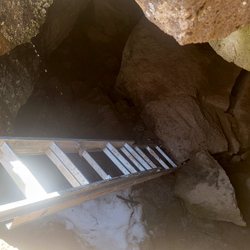
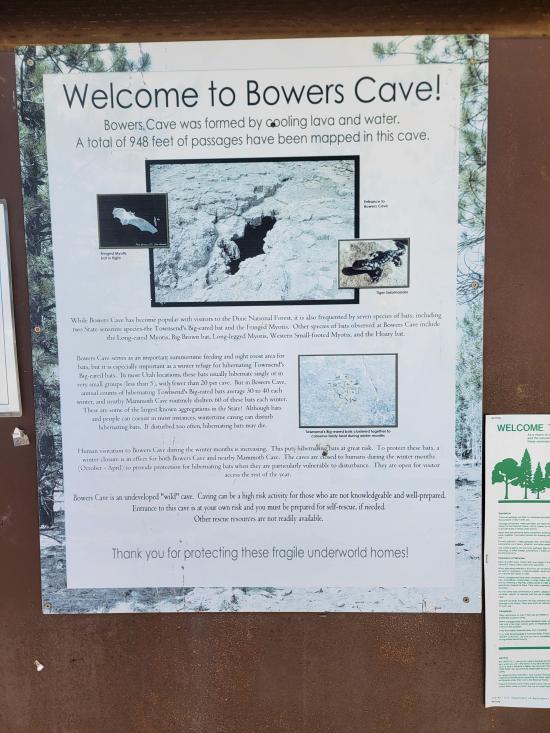
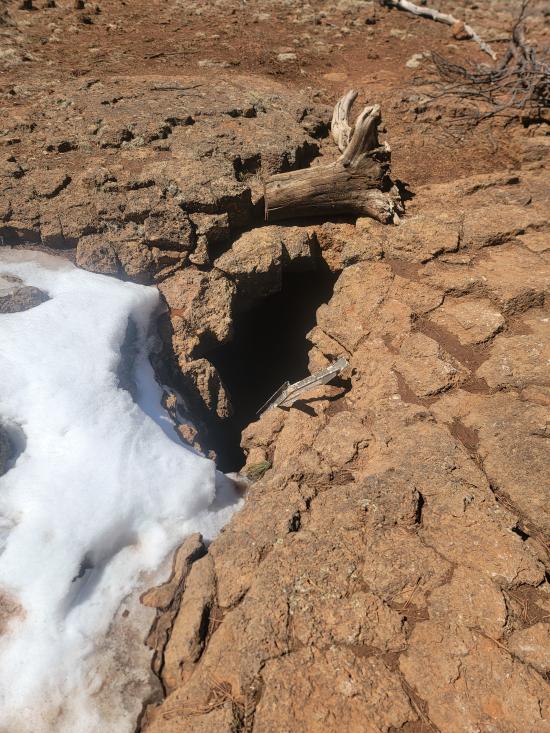
Bower’s Cave is located near Duck Creek Village, Utah, on the Markagunt Plateau within Dixie National Forest. It is not a typical limestone cavern but a lava-tube style cave, formed when molten lava flowed, then drained, creating a hollow passage in the rock. The elevation is fairly high (around 7,000+ ft) so interior temperatures remain cool. Bower's Cave has a total of 948 feet of mapped passages.
While Bowers Cave has become popular with visitors to Dixie National Forest, it is also frequented by seven species of bats, including two State sensitive species-the Townsend's Big-eared bat ad the Fringed Myotis. Other species of bats observed at Bowers Cave include the Long-eared Myotis, Big Brown bat, Long-legged Myotis, Western Small-footed Myotis, and the Hoary bat.
Bowers Cave serves as an important summertime feeding and night roost area for bats, but it is especially important as a winter refuge for hibernating Townsend's Big-eared bats. In most Utah locations, these bats usually hibernate singly or in very small groups (less than 5), with fewer than 20 per cave. Bit in Bowers Cave, annual counts of hibernating Townsend's Big-eared bats average 30 to 40 each winter, and nearby Mammoth Cave routinely shelters 60 of these bats each winter. These are some of the largest known aggregations in the State! Although bats and people can coexist in most instances, wintertime caving can disturb hibernating bats. If disturbed too often, hibernating bats may die.
Human visitation to Bowers Cave during the winter months is increasing. This puts hibernating bats at great risk. To protect these bats, and winter closure is in effect for both Bowers Cave and nearby Mammoth Cave. The caves are closed to humans during the winter months (October - April) to provide protection for hibernating bats when they are particularly vulnerable to disturbance. They are open for visitor access the rest of the year.
Bowers Cave is an undeveloped "wild" cave. Caving can be a high-risk activity for those who are not knowledgeable and well-prepared. Entrance to this cave is at your own risk and you must be prepared for self-rescue, if needed. Other rescue resources are not readily available.
Thank you for protecting these fragile underworld homes!
Cave Type: Horizontal
Time: 1 hour
Length: 948 ft
Depth: Negligible
Gear: Headlamp, knee pads, helmet.
Fees: None
Recommended Ages:
 | 0-3 |
 | 4-11 |
 | 12-19 |
 | 20-49 |
 | 50-69 |
 | 70+ |
Recommended Months to Visit:
| Jan |
| Feb |
| Mar |
| Apr |
| May |
| Jun |
| Jul |
| Aug |
| Sep |
| Oct |
| Nov |
| Dec |
Permits: Open
Navigate to 37.554886, -112.627457.
Closest City or Region: Duck Creek Village, Utah
Coordinates: 37.555465, -112.628158
By Jeremy Dye
Jeremy Dye, Tara Dye, Savannah Dye, Madilyn Dye, Cooper Dye, Matt Laurendeau, Amanda Laurendeau, Alex Laurendeau, Caleb Laurendeau, Rose Laurendeau, Lila Laurendeau, Trey Laurendeau,
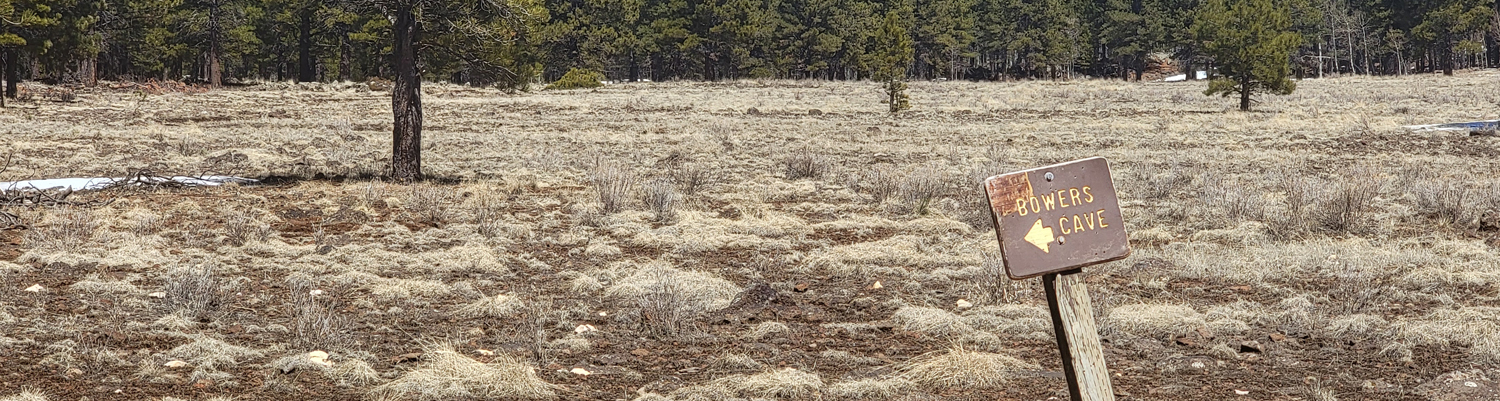
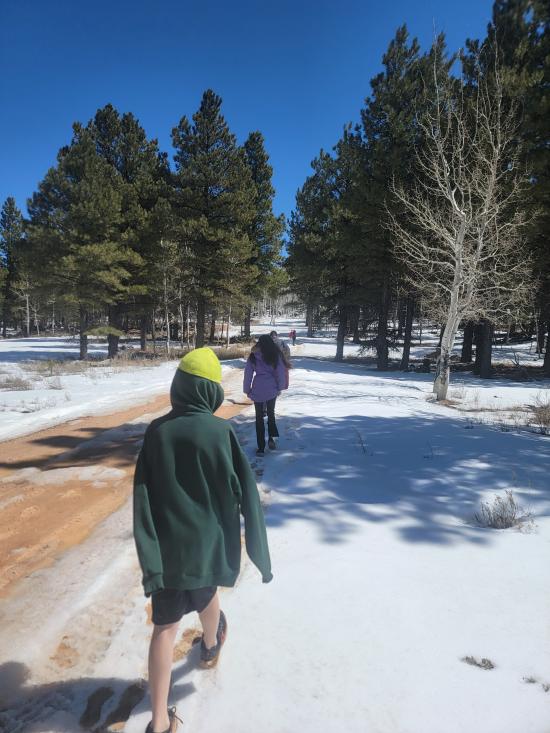
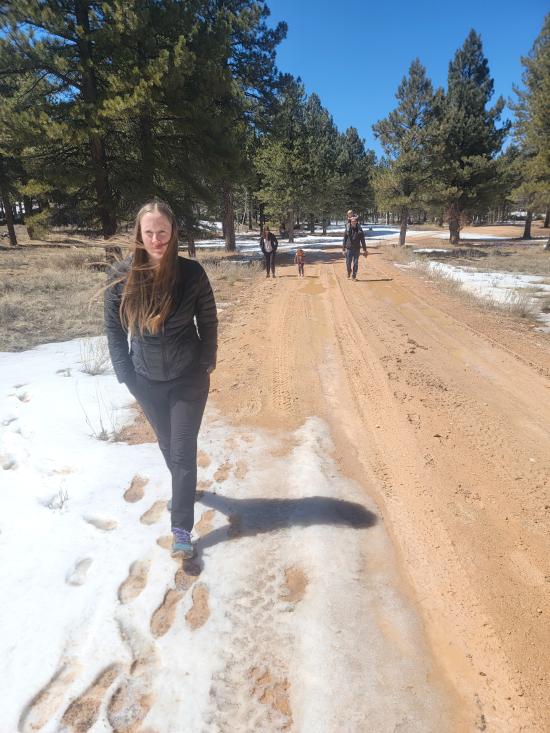
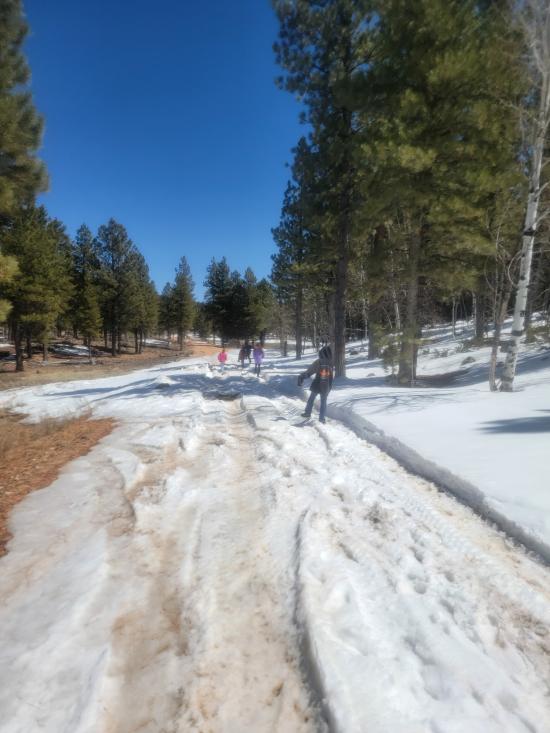
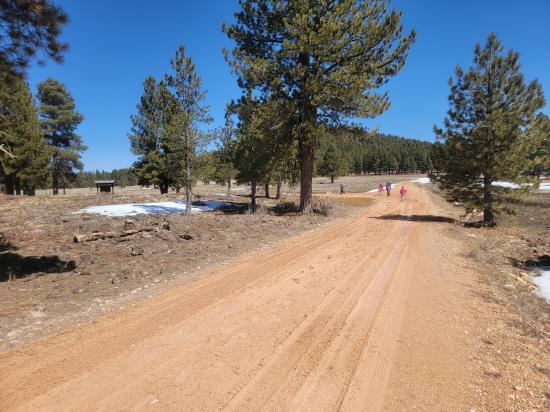
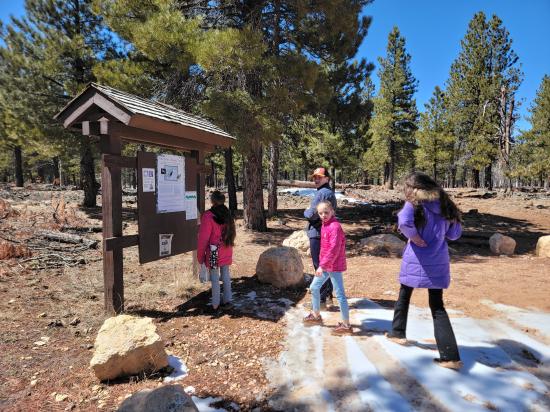
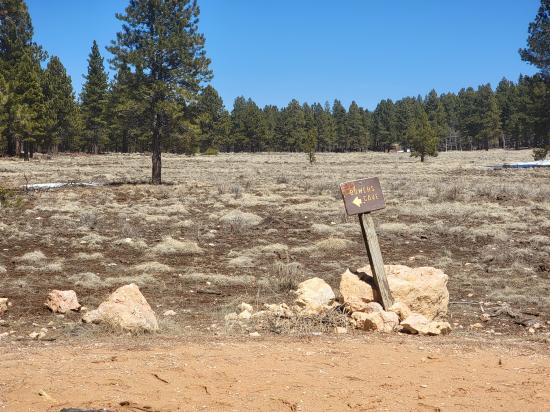
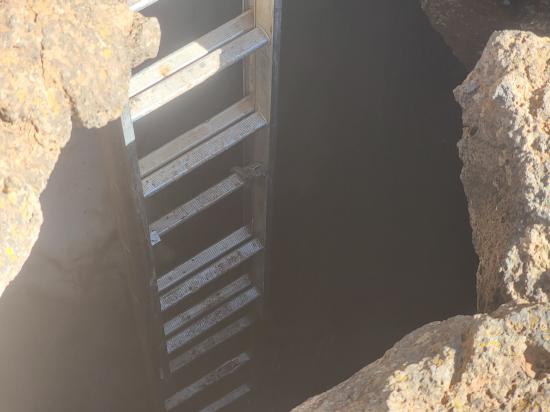
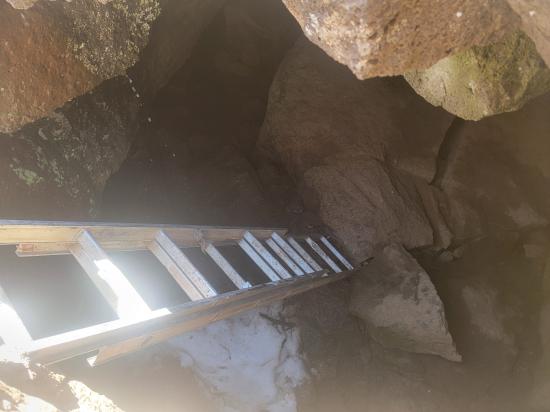
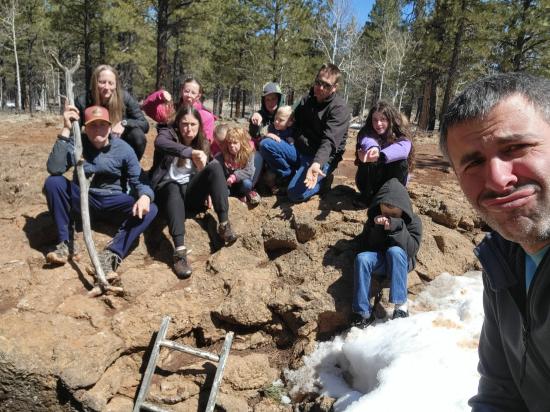
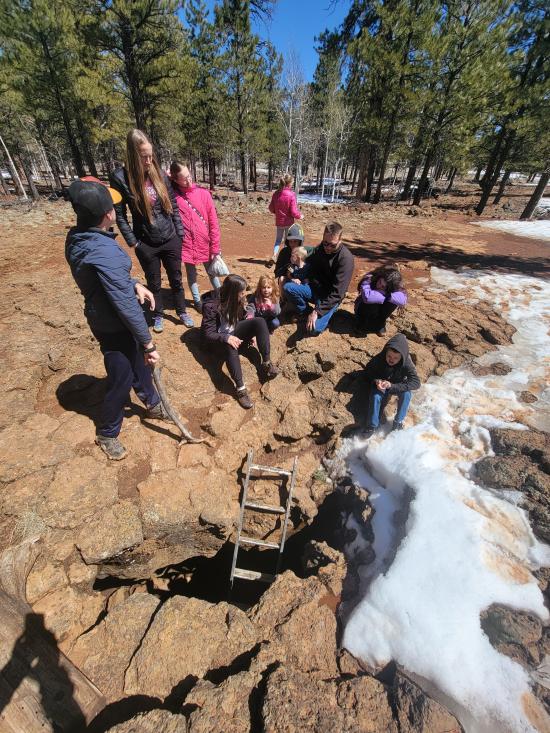
On our way home from Spring Break, we stopped at Bowers Cave. We only made it about 100 ft onto the dirt road before it got too snowy and muddy to continue. There was a guy we didn't know who was trying to dig his car out of the mud. He had driven off the road to turn around and gotten very stuck. All the adults plus a couple of the older kids helped push him back onto the road. He was lucky we showed up because he was a long way from civilization. Since we couldn't take the vans down the dirt road, we decided to walk instead. It was only 0.6 miles. When we got to the cave, there was a an information sign that said that the cave was closed through the end of April due to hibernating bats. We were pretty bummed that we couldn't go in the cave but also a little bit relieved because it was very wet and muddy. We hiked back to the cars then continued driving home, stopping at Cedar Breaks National Monument on the way.
_550w.jpg)
 Camp Sites:
 Panguitch Lake North Campground
 Canyoneering:
  Caving:
  Fun Places:
 Cedar Breaks National Monument
Sunset View Overlook (Cedar Breaks)
 Hiking:
 Rattlesnake Creek Trail to Ashdown Gorge
 Indoors: Camp Sites:
 Panguitch Lake North Campground
Canyoneering: Caving: Fun Places: Hiking:  Caves
Caves Headlamps required
 No Drinking Water
 No Restrooms
 Road Access is Dirt - Low Clearance
 Access Road is 2WD Accessible