
 Fun Places | Castle Gate Display Cases


Hype:
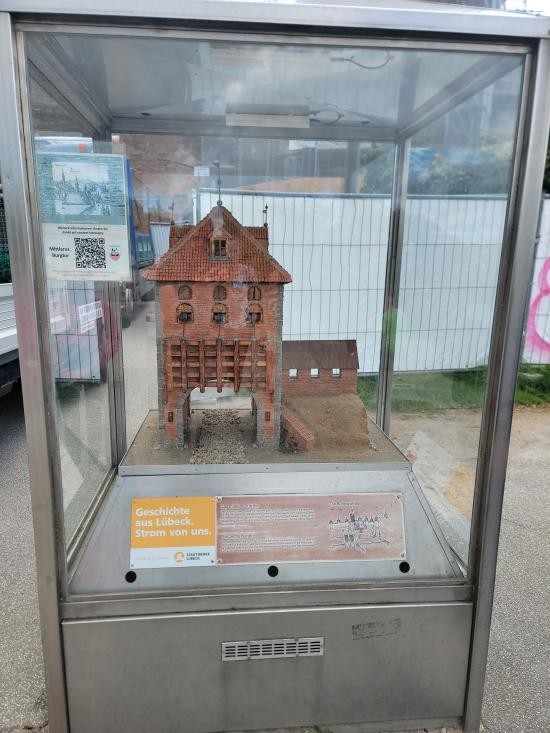
The three display cases at Lübeck’s gates together tell the story of a layered and evolving defensive system that protected the city from the 13th through the 17th centuries. Each model is accompanied by explanatory signage that anchors the reconstruction to archaeological evidence, historical records, and depictions of Lübeck, allowing visitors to understand structures that no longer exist in the modern cityscape.
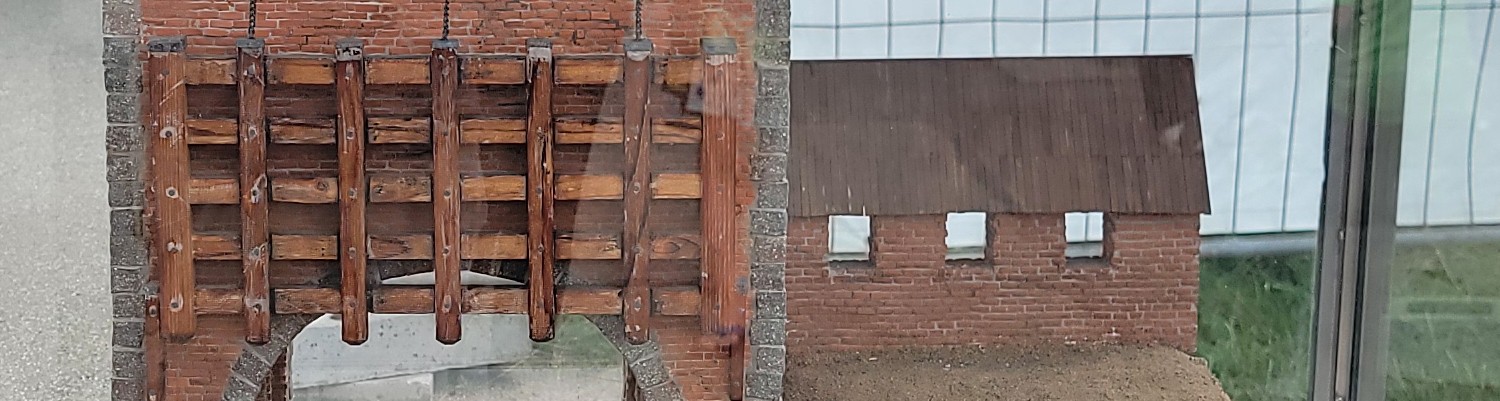
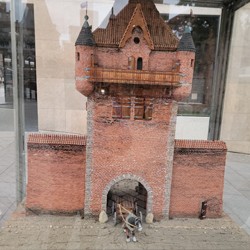
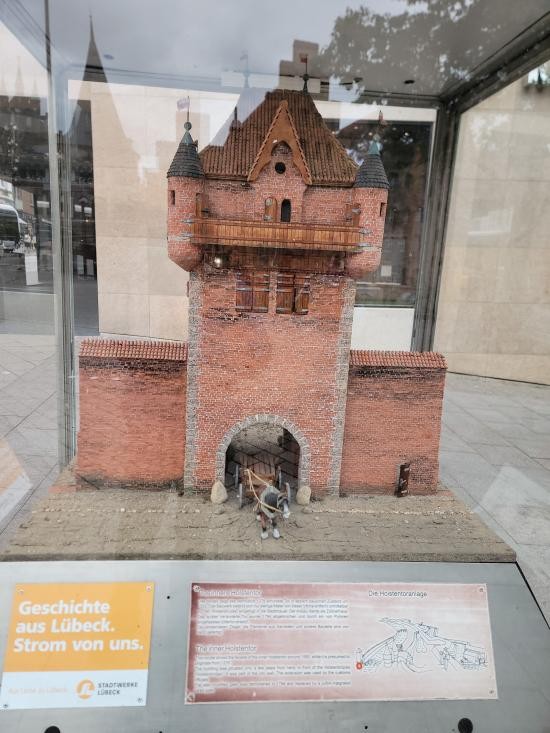
The model of the Inner Holstentor depicts the gate’s façade as it likely appeared around 1550, though its origins are presumed to date back to 1376. Located just in front of the Holsten Bridge and integrated into the city wall, this structure also housed an extension used by customs officials, emphasizing its administrative as well as defensive role. The model helps clarify that the famous Holsten Gate visible today was once part of a much larger and more complex gateway system, most of which was later altered or removed, with the Inner Holstentor itself demolished in 1794.
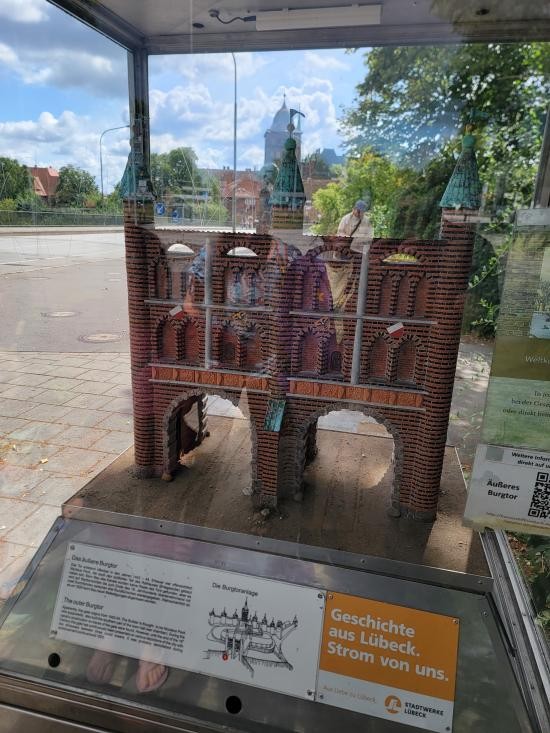
The two Burgtor models focus on Lübeck’s northern defenses. The Center Burgtor traces its origins to 1241 and is known primarily through archaeological remains rediscovered during canal construction in 1896–1897, including evidence of an internal lock system. The Outer Burgtor, dating to around 1442–1444 and possibly built by Nicolaus Peck, is known from historical depictions rather than physical remains, showing a gate with two driveways flanked by three round towers. Together, these models illustrate how successive gates replaced one another over centuries and how Lübeck’s fortifications were repeatedly demolished, buried, and reinforced as military needs and urban planning evolved.
The Inner Holstentor
This model shows the facade of the inner Holstentor around 1550, which it is presumed to originate from 1376. The building was situated only a few steps from here, in front of the Hostenbrucke (Holstenbridge), it was part of the city wall. The extension was used by the customs officials. The later modified gate was demolished in 1794 and replaced by a pylon-integrated bared gate.
The Center Burgtor
This gate has its origin in 1241. During the canal construction works in 1896-1897 remainders of this gothic gate were rediscovered. A lock system on the inner side of the gate could be traced. During fortification works in 1622 this gate was demolished and the foundation walls were buried.
The Outer Burgtor
Apparently, this gate origins from 1442-1444. Thsi builder is thought to be Nicolaus Peck who supposedly also built the southern part of the town hall (war chamber). During the canal's construction no traves of the gate were found. However, unti lthe end of the 16th century this gate has continuously been presented on various depictions of the city with two driveways between three round towers. It was probably demolished during reinforcement works around 1625.
Time:
Fees: None
Recommended Ages:
 | 0-3 |
 | 4-11 |
 | 12-19 |
 | 20-49 |
 | 50-69 |
 | 70+ |
Recommended Months to Visit:
| Jan |
| Feb |
| Mar |
| Apr |
| May |
| Jun |
| Jul |
| Aug |
| Sep |
| Oct |
| Nov |
| Dec |
By Jeremy Dye
Jeremy Dye, Tara Dye, Savannah Dye, Madilyn Dye, Cooper Dye,
There were some fun models in glass cases on either side of the bridge that showed what the walls, gates, and towers looked like in medieval times.
After we had our fill of Travemünde, we caught a bus back to Lübeck. We got off the bus on the north end of town and saw some cool gate towers as we crossed the bridge onto the island.
 Niagara City Cruises Boat Tour
 Covent Garden Street Performers
 Warner Bros Studio Tour London
St. Michael's Church Hildesheim
St. Mary's Cathedral Hildesheim
Market Church of St. Cosmas and Damian Goslar
 Goslar Historical Town Fortifications
 Memorial to the Murdered Jews of Europe
New Synagogue Berlin - Centrum Judaicum
Kaiser Wilhelm Memorial Church
Charlottenburg Palace, Old Palace
Charlottenburg Palace, New Wing
Charlottenburg Palace, New Pavilion
Museum of Nature and Environment
Royal North Zealand National Park
Fantasy Island (Island of Imagination)
Praestevang Forest Parkour Course
Daempegardsdysse Kongedyssen Long Barrow Dolmen
Meteorite at the Norwegian Natural History Museum
Catholic Church of Our Lady Aarhus
Gudena River from Tange to Langaa
The Coastal Museum Bangsbo Fort
Jelling Mounds, Runic Stones, and Church
Frederiksberg Garden Playground
 Interpretive Signs